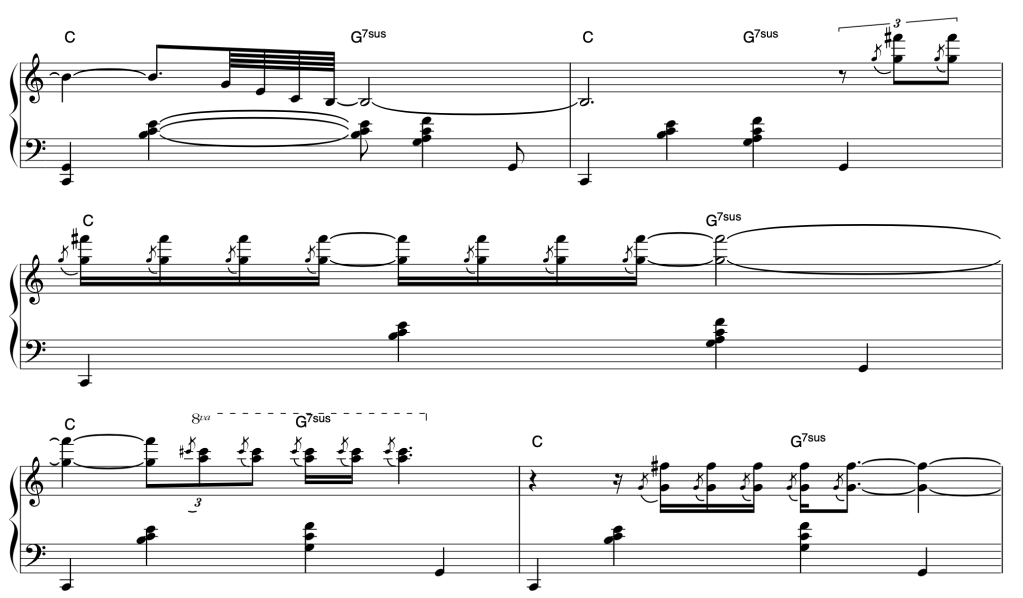
Evans approaches this section, a four-bar phrase, with a familiar, descending arpeggiation of the tonic chord. The 7th of the CMA7 serves as the third of the dominant harmony that follows. The serene nature of the piece begins to unravel as the pianist introduces a striking G5-F#6 dyad that is prefaced with a G5 grace note. The effect is startling.
In the third bar of the excerpt (beats 1 and 2), Evans manipulates the previous dyad concept and applies it to the 13th and sharp-9th of the tonic chord — played an octave higher. These notes move to become the 9th and sharp-11th of the dominant on the last two beats of the measure, respectively. There’s almost a sense of call and response between the phrases.
Evans, ever the believer in theme-and-variations, performs the major-7th dyad again in measure forty-six, but this time, an octave lower. The impact is less strident than earlier, but I believe he is coaxing the listener — perhaps in believing the tension has been permanently resolved.
As I have written in previous blog entries, this piece was my first exposure to Bill Evans. At the risk of being redundant, it was the major-7th figure, in measure forty-three, that woke me from my slumber, exclaiming, “What the hell was that?”
Now, I know.

